
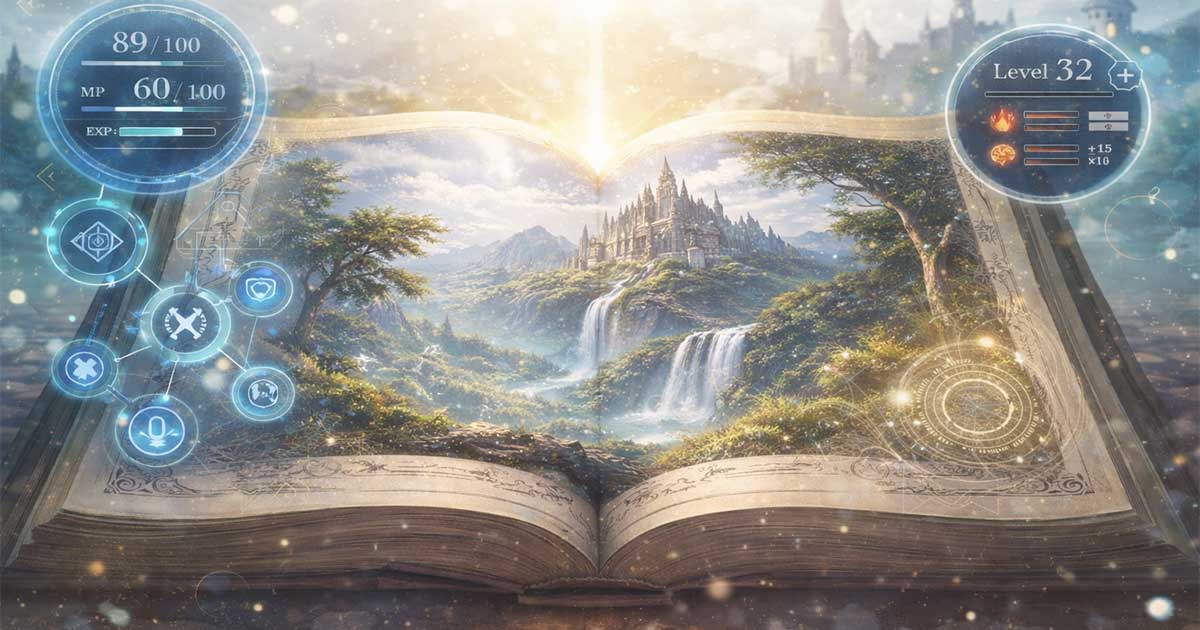
Why Isekai Light Novels Rely on Structured Power Systems
Isekai light novels did not become dominant by accident. While the “another world” premise attracts readers, the real engine behind the genre’s success is structure — particularly in how power systems are designed and integrated into long-term storytelling.
Unlike many forms of traditional fantasy, isekai light novels rarely rely on vague or undefined magic. Instead, they introduce clear rules, measurable growth, and visible progression. This structural clarity is one of the reasons readers return volume after volume.
For a broader overview of how the genre evolved and why it dominates modern fantasy, see the main guide on Isekai Light Novels.
The Role of Rules in Isekai Light Novels
In many isekai light novels, the protagonist enters a world governed by systems:
- Mana pools
- Skill trees
- Class evolutions
- Ranked abilities
- Guild hierarchies
These elements create predictability without reducing tension. Readers understand what is possible and what is not. When the protagonist grows stronger, that growth feels earned rather than arbitrary.
This differs significantly from softer magic systems in Western epic fantasy, where limitations are sometimes deliberately obscure.
Progression as Narrative Momentum
One of the defining strengths of isekai light novels is progression pacing.
Because many series are serialized across multiple volumes, authors need a mechanism to sustain interest. Structured power systems provide exactly that mechanism.
Each volume can escalate through:
- A new skill unlocked
- A new political layer revealed
- A new threat tier introduced
- A new territory or kingdom explored
The system becomes the scaffolding of the narrative.
The Balance Between Power and Stakes
However, not all isekai light novels succeed equally. When progression outpaces tension, stories risk becoming repetitive power fantasies.
The strongest entries in the genre balance structured growth with escalating consequences:
- Political resistance
- Moral dilemmas
- Emotional attachments
- Leadership burdens
A powerful protagonist without increasing responsibility quickly becomes narratively flat.
Why Readers Expect Structure in Isekai Light Novels
Modern audiences have developed expectations.
When readers pick up an isekai light novel, they anticipate:
- Clear mechanics
- Consistent rules
- Logical worldbuilding
- Measurable advancement
Removing those elements often leads to disappointment because the genre’s identity is deeply tied to structured development.
Isekai Light Novels and Modern Fantasy Evolution
The influence of isekai light novels now extends beyond Japan. Western progression fantasy and LitRPG fiction borrow heavily from this structure-first model.
The result is a new hybrid form of fantasy where readers want both immersion and transparency. They want emotional arcs, but they also want to understand the system.
Isekai light novels provide that balance more consistently than many other fantasy formats.
Final Thoughts
At the surface level, isekai light novels are about entering another world. At a structural level, they are about rules, growth, and long-term escalation.
That combination — immersive displacement plus measurable progression — explains why the genre continues to dominate modern fantasy publishing.